
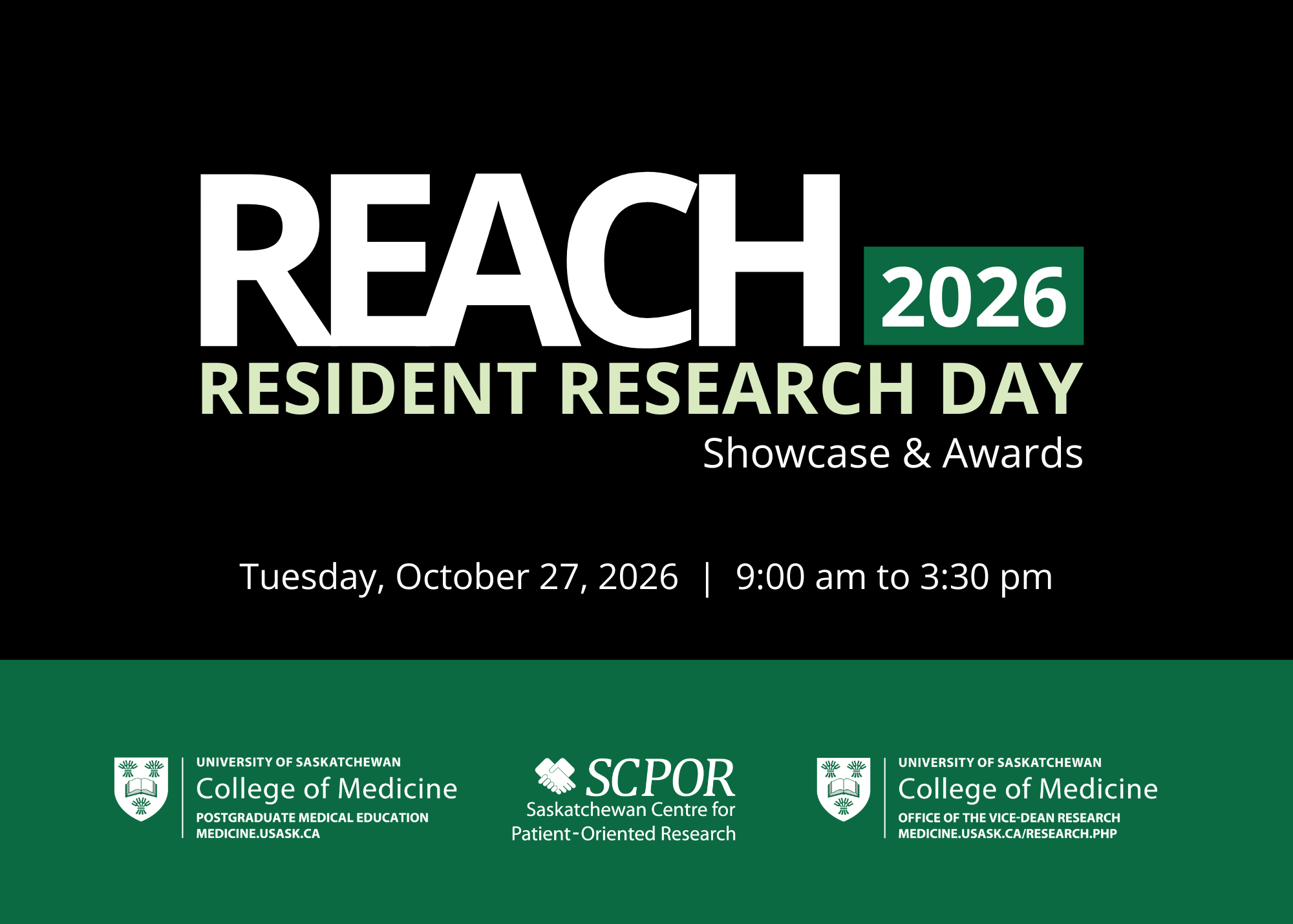
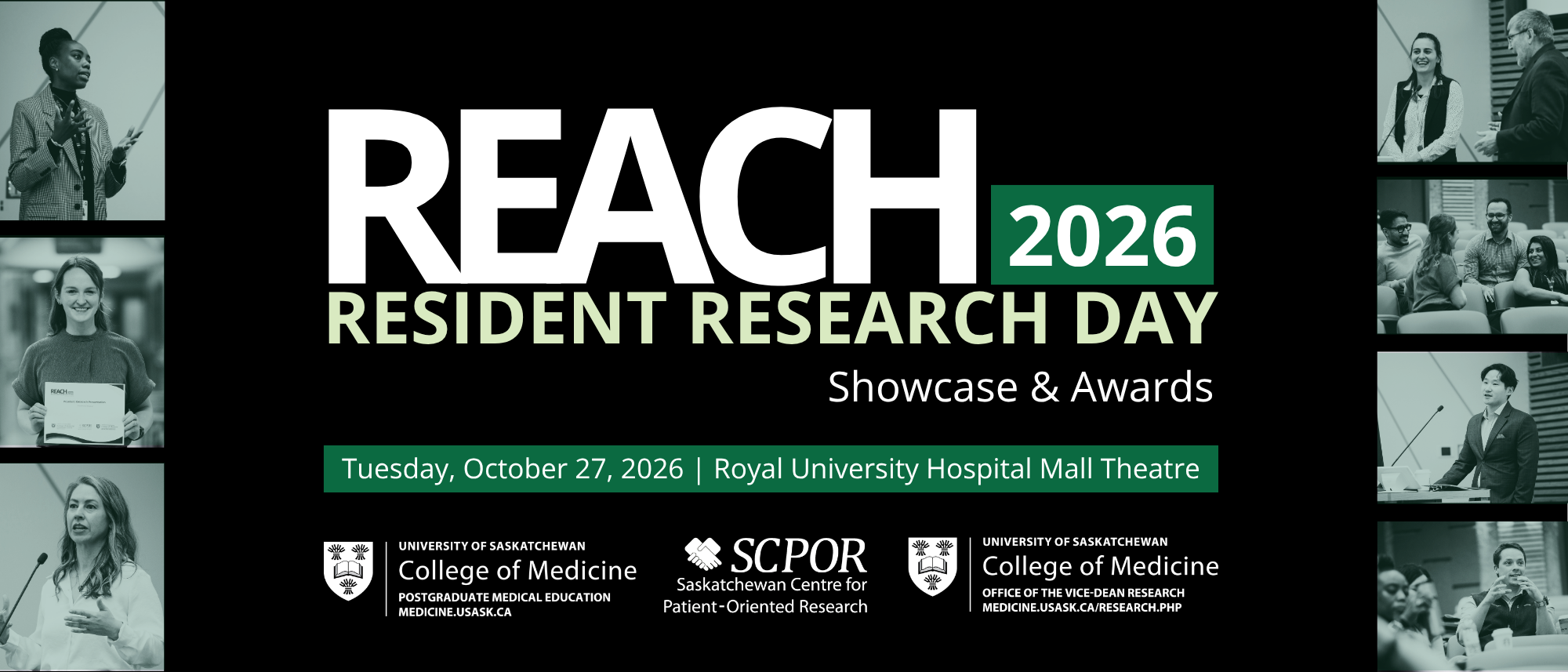
REACH Resident Research Day
Learn about the exciting research taking place by the University of Saskatchewan’s finest! As the name suggests, REACH Resident Research Day highlights the research being undertaken as part of residency education. This event, brought to you by the University of Saskatchewan’s Postgraduate Medical Education and Office of the Vice-Dean Research as well as the Saskatchewan Centre for Patient-Oriented Research, showcases a variety of research projects, including basic, applied, translational and patient-oriented research.
Join us on October 27, 2026 online or at the Royal University Hospital Mall Theatre. Residents will be sharing research presentations throughout the day starting at 9:30 am - stay for the day or come and go as you are able and learn about the exciting and innovative research taking place right here in our province!
Attend in Person: Click here to register
Attend Online: Click here to register online

HRDP-SK CoP: Data Dictionaries
Join us for our upcoming HRDP-SK Community of Practice session on Data Dictionaries!
The session will explore data dictionaries, including:
How to use data dictionaries effectively
Common challenges and considerations
Shared practices and approaches
🍕 Attending in person? A pizza lunch will be provided!
Please RSVP to help us plan for attendance and lunch. Your RSVP will also ensure you receive the Zoom access details if you’re joining virtually.
RSVP: https://www.surveymonkey.ca/r/Z7CKX7T
We look forward to connecting with you!
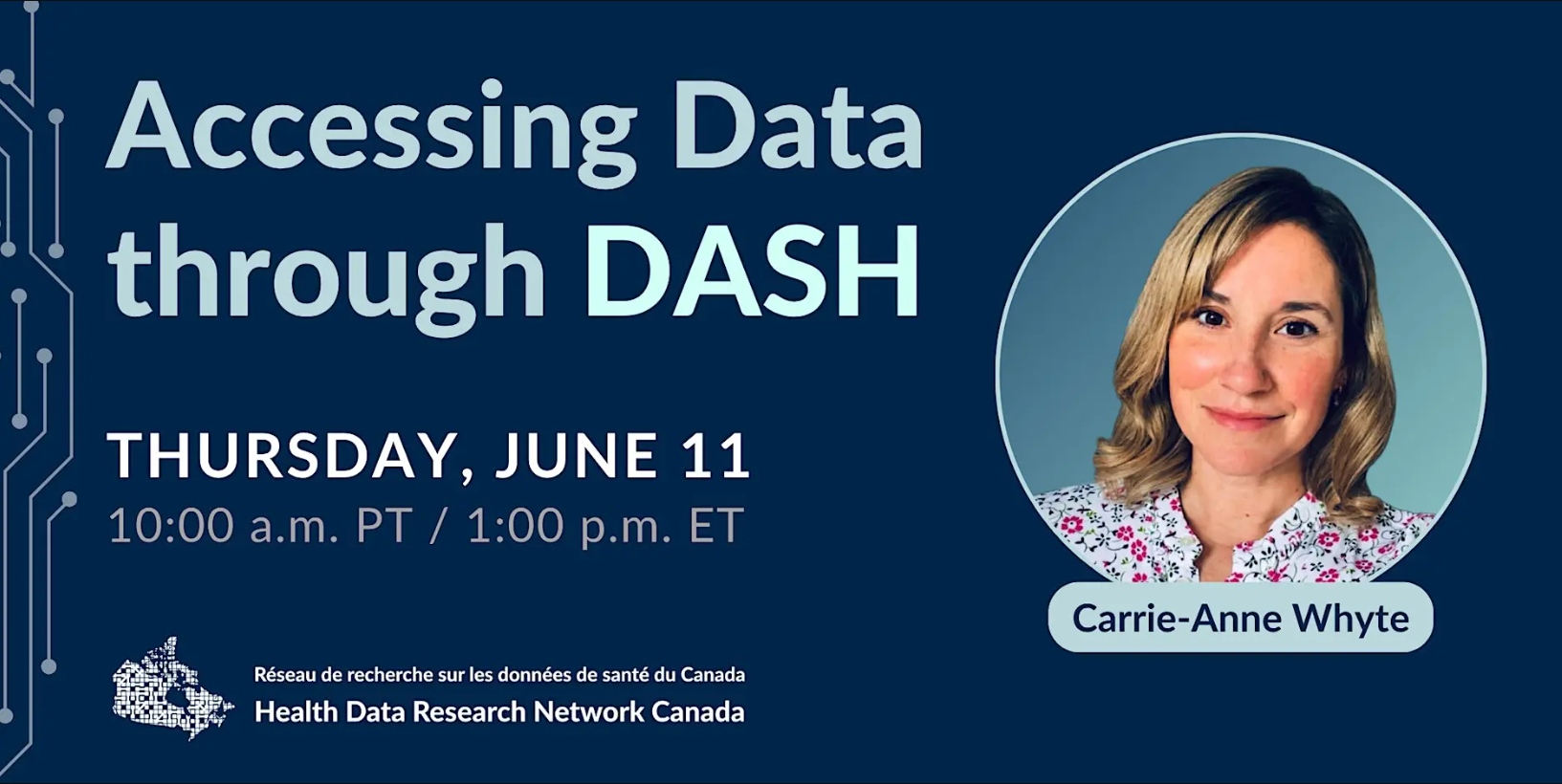
HDRN Canada: Accessing Data Through Dash
Learn how HDRN Canada's Data Access Support Hub (DASH) can help health researchers access multi-regional data.
Are you a researcher seeking administrative health data from more than one province or territory? Join us for Accessing Data through DASH with Carrie-Anne Whyte to learn more about how HDRN Canada can support your multi-regional project through the Data Access Support Hub (DASH) DASH offers coordinated services to researchers interested in accessing multi-regional administrative health data, helping you navigate the data access process through centralized services and tools, including:
the single data access request form to request data from multiple regions
HDRN Canada’s Data Assets Inventory and Algorithm Inventory
and free feasibility confirmation, cost estimates and letters of support.
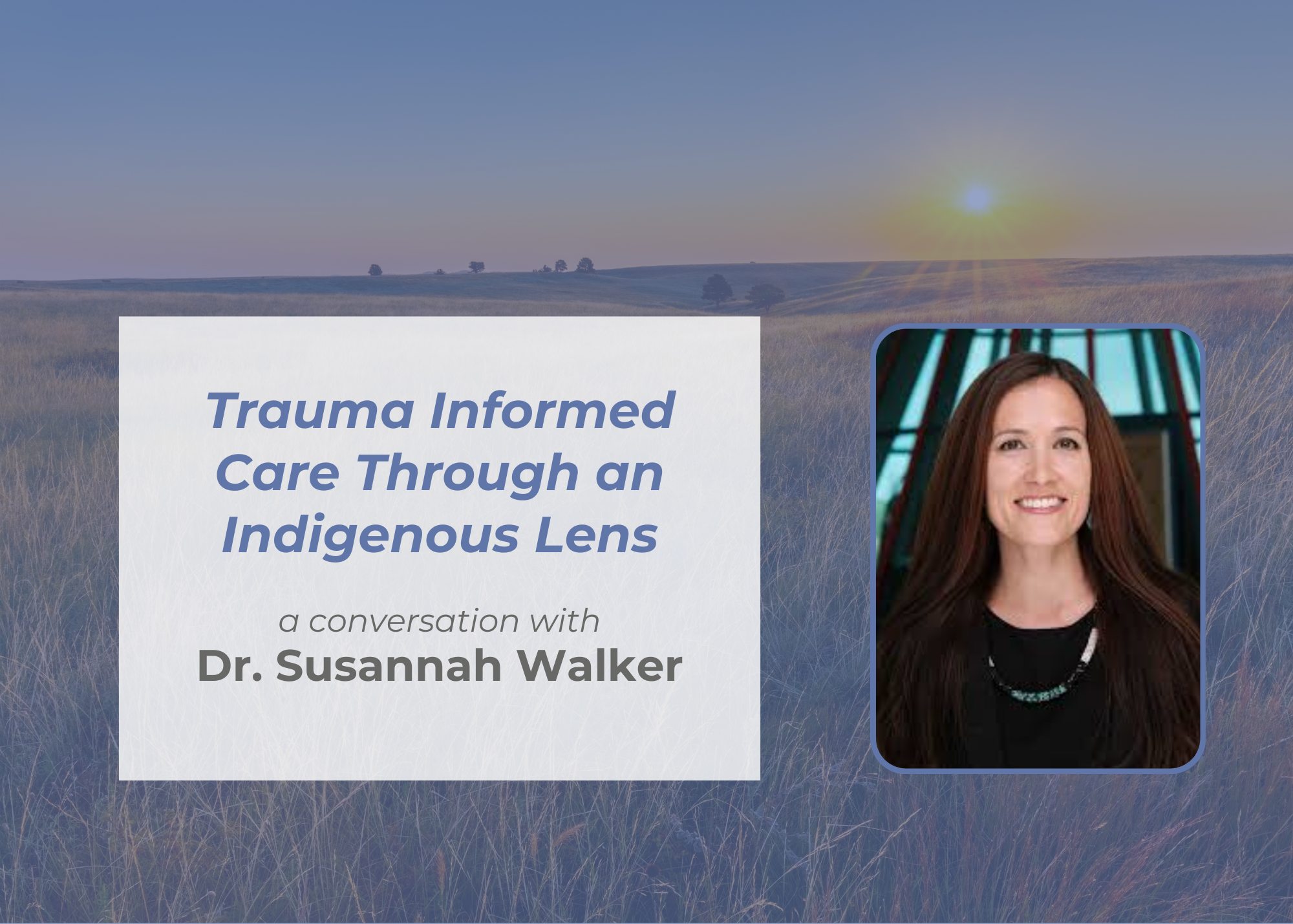
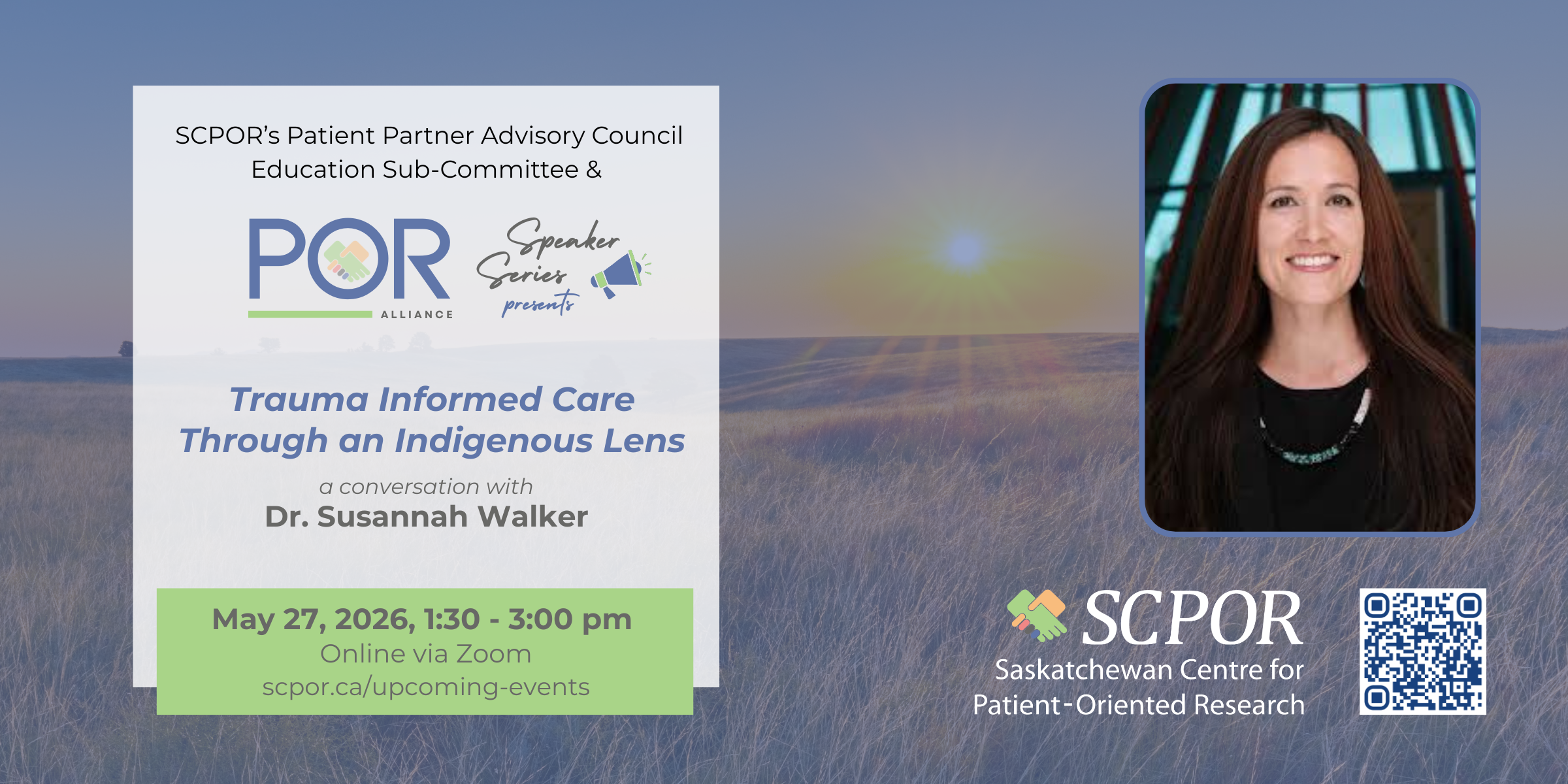
Trauma Informed Care Through an Indigenous Lens
Please join us online for an informative and engaging conversation with Dr. Susannah Walker as she explores Trauma Informed Care through an Indigenous Lens; and draws on her wide-ranging experience in the social work field and with Indigenous communities. This talk will explore some of the core concepts of trauma informed care, what makes it distinct from other forms of care and why it is needed
HRDP-SK Community of Practice: Data Vetting
HRDP-SK Community of Practice: Data Vetting
The HRDP-SK Community of Practice is holding a session focused on Data Vetting. This session will explore data vetting processes, common challenges, and shared practices among the HRDP-SK user community.
Date: Tuesday, May 26
Time: 12:00–1:00 PM CST
Are you an HRDP-SK user and interested in attending?
Please contact HRDP-SK at HRDP-SK@usask.ca
Improving Mental Health Support for People Living with Long COVID
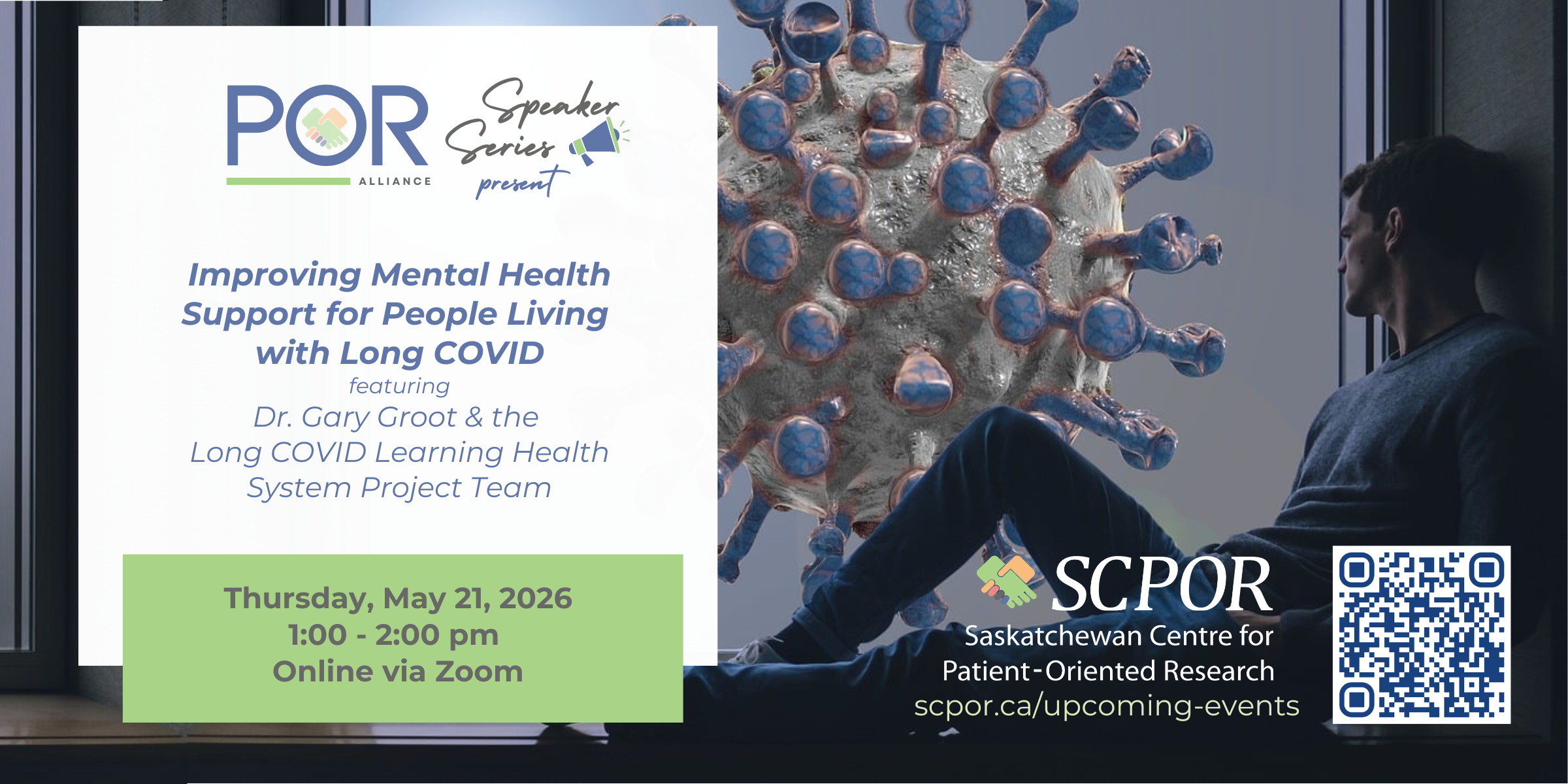
The Long COVID Learning Health System project, led by Dr. Gary Groot focuses on improving mental health support for people living with Long COVID by addressing patient-identified priorities through evaluation and evidence synthesis. Learn more about their work on scoping reviews, patient-reported outcome measures, realist evaluation and more, and see how the project will inform integrated care pathways, supporting evidence-informed and patient-centred care.
Thursday, May 21, 2026, 1-2 pm | Online via Zoom
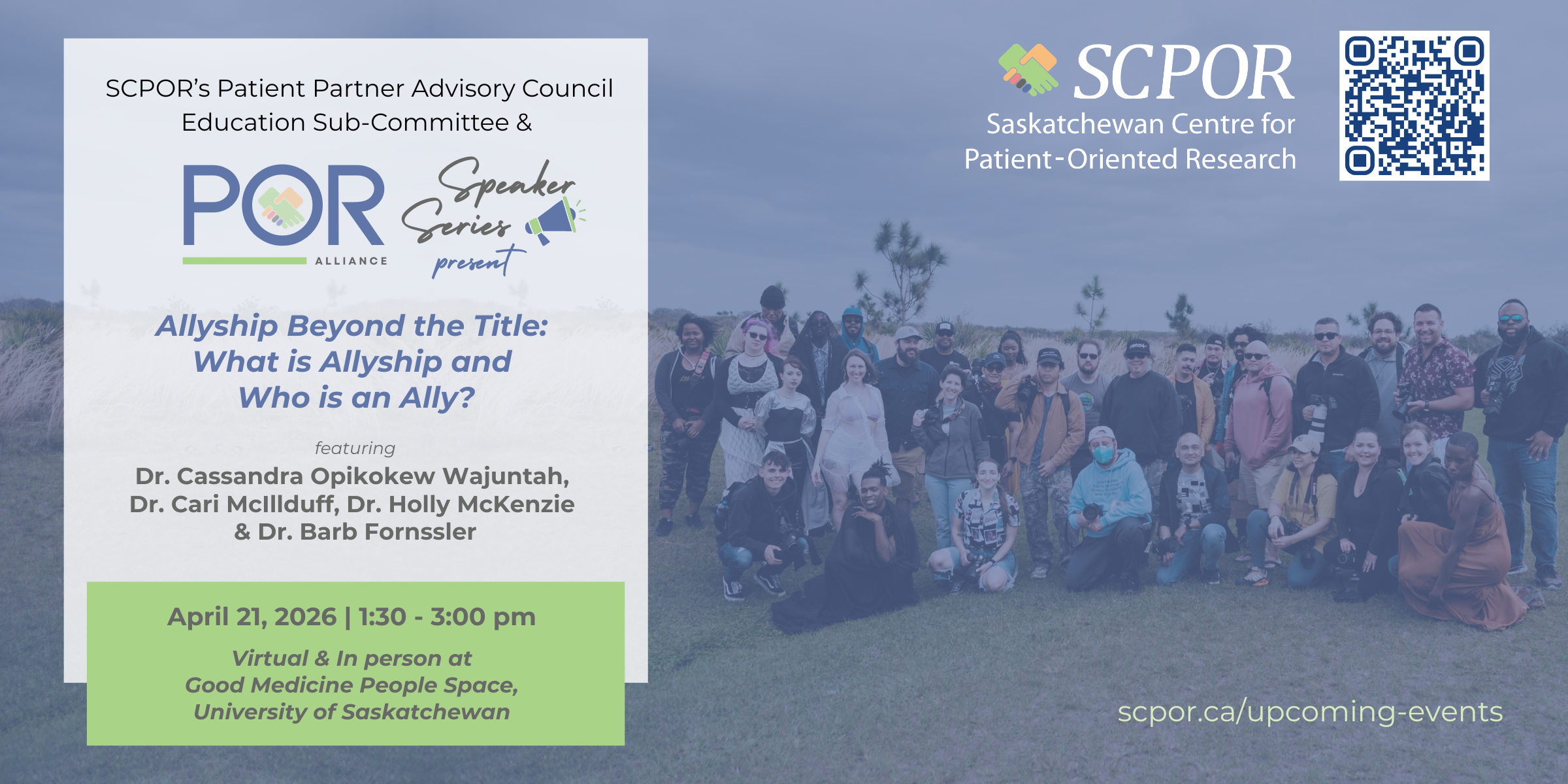
Allyship Beyond the Title: What is Allyship and Who is an Ally?
Please join us for an informative and frank conversation about allyship and what is means to be an ally. The panelists will discuss key components and stages of allyship, what you can expect as an ally and what may be asked of you. Helpful tips on some do's and don'ts on the road to Allyship will be provided, as well as discussion on whether being an ally is for everyone?
Featuring panelists Dr. Cassandra Opikokew Wajuntah, Dr. Cari McIllduff, Dr. Holly McKenzie and Dr. Barb Fornssler.
Click here to register to attend in-person event in Saskatoonat the Good Medicine People Space on the fourth floor of the Health Sciences Building, University of Saskatchewan
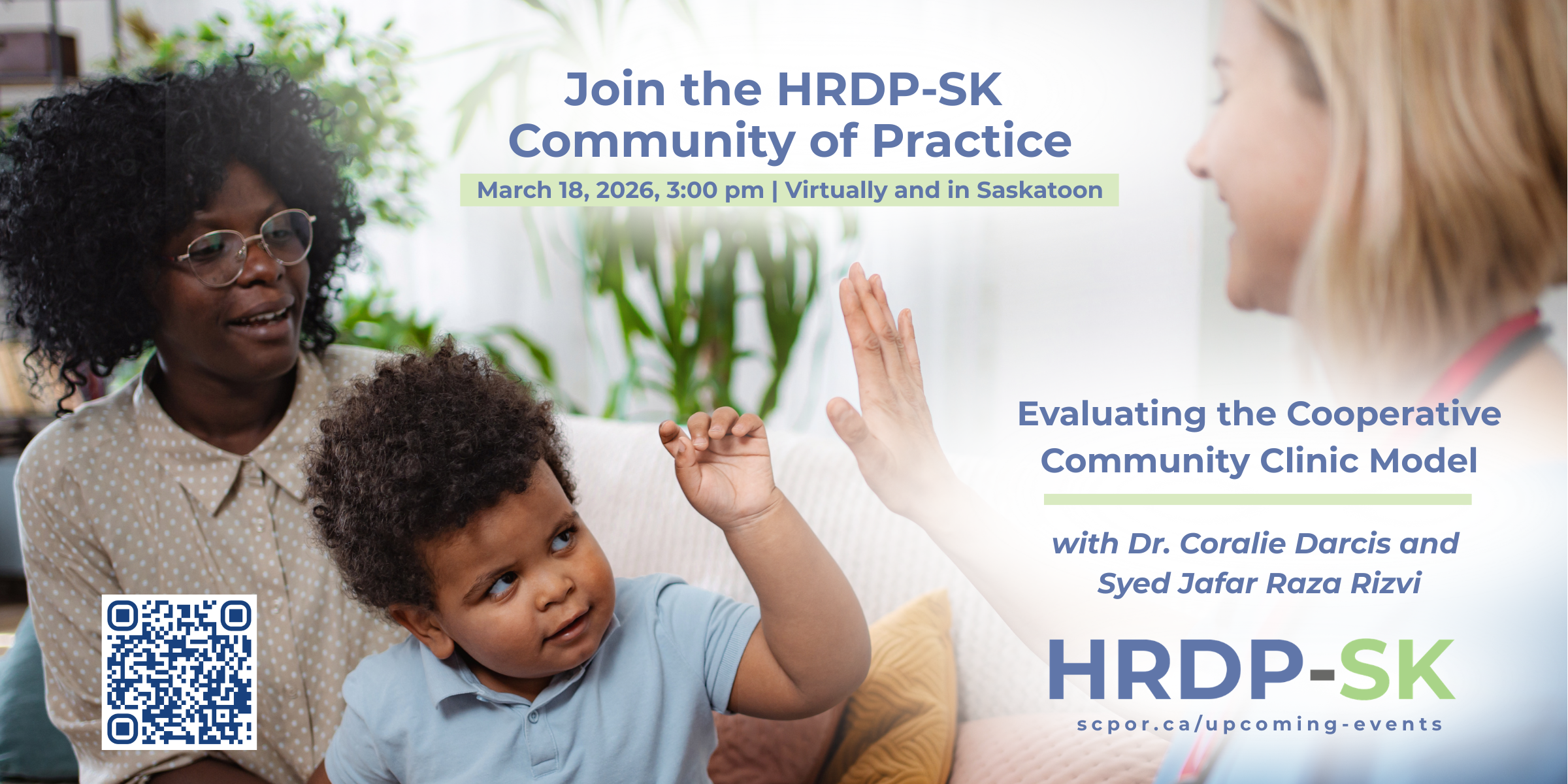
Evaluating the Cooperative Community Clinic Model
Please join the Health Research Data Platform - Saskatchewan (HRDP-SK)Community of Practice where Dr. Coralie Darcis and Syed Jafar Raza Rizvi will share their research and findings on the Saskatoon Community Clinic's Westside and Downtown locations, and the successes and challenges of delivering healthcare for this cooperative clinic.
For over 60 years, the Saskatoon Community Clinic (SCC) has stood out as an anomaly in Saskatchewan’s—and even Canada’s—healthcare system, delivering team-based, patient-centred services within a co-operative, patient-led governance model that contrasts with the physician-led clinics dominating primary care in the province.
Coffee and refreshments will be served!
Wednesday, March 18, 2026, 3:00pm
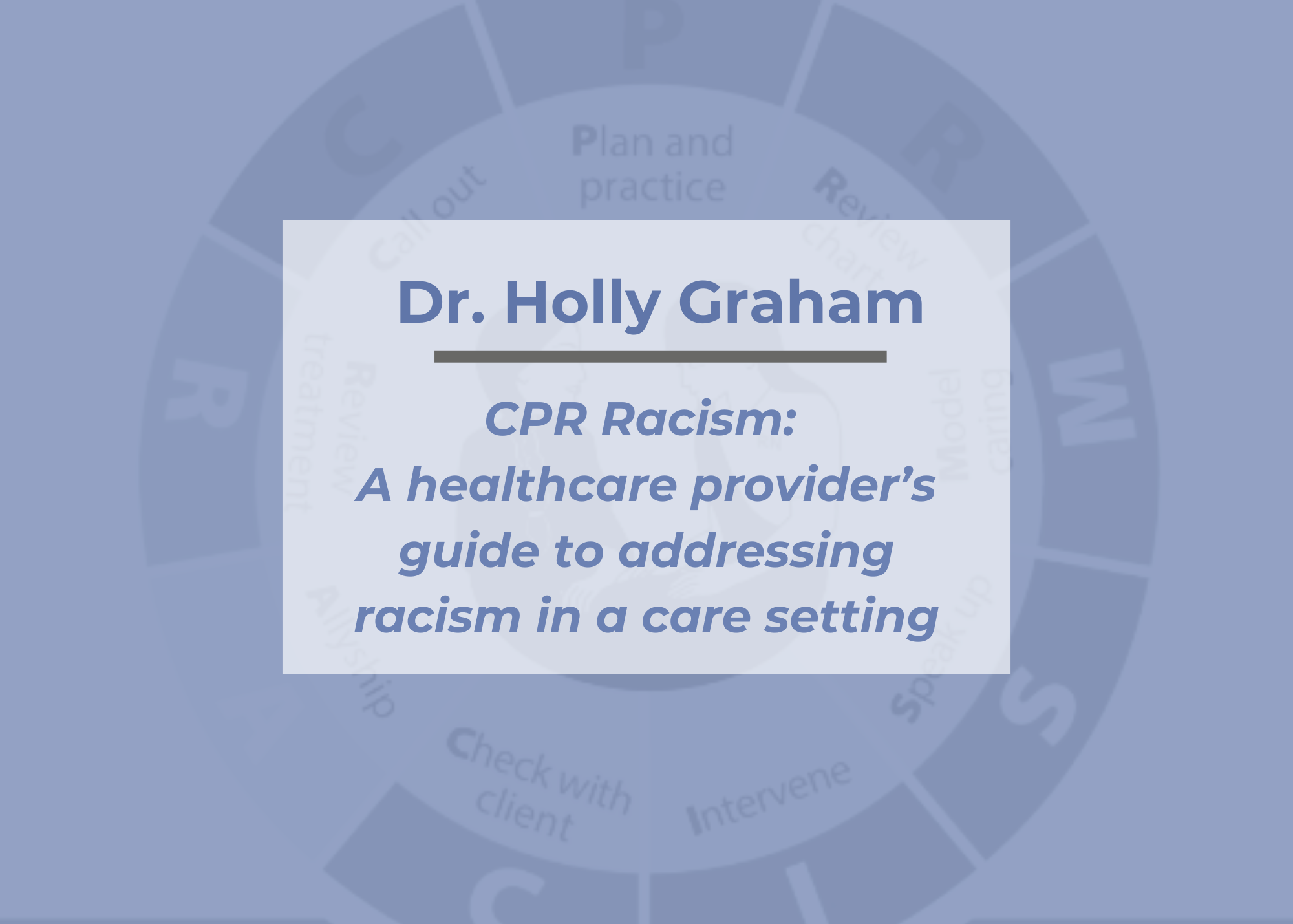
CPR Racism with Dr. Holly Graham
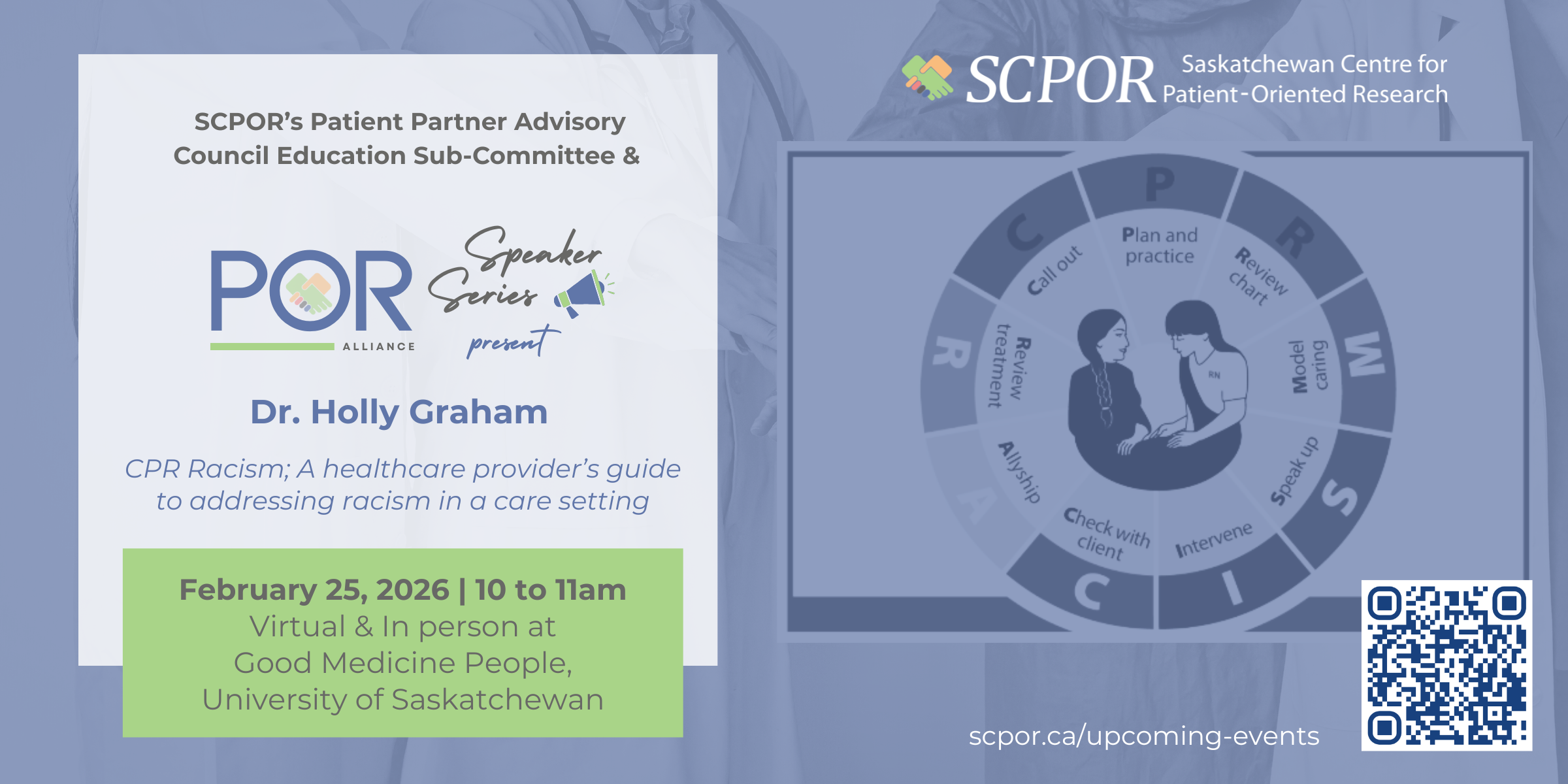
Join SCPOR’s POR Alliance and Patient Partner Advisory Council’s Education Sub-Committee in a session by Dr. Holly Graham, Professor of Psychiatry at the University of Saskatchewan. On Wednesday, February 25, 2026, Dr. Graham will present on the new CPR Racism Guide and its use in Saskatchewan healthcare. The event will be presented both online and in person at the University of Saskatchewan’s College of Medicine Good Medicine People Space.
Online - Click here to Register
In Person (Saskatoon) - Click here to Register
College of Medicine Good Medicine People Space
University of Saskatchewan, Health Sciences 4th Floor E Wing

Using Administrative Data in Rural Dementia Health Services Research
The Rural Dementia Action Research (RaDAR) Team works to advance the quality of care for individuals living with dementia in rural communities. In this session, HRDP-SK researchers Dr. Julie Kosteniuk, Dr. Jaqueline Quail and Beliz Açan Osman discuss the importance of recognizing and addressing rural-specific issues in dementia care research and highlight related initiatives. They offer an overview of studies examining health service use, including those that use linked clinical and administrative data, and describes methods for identifying rural populations and persons with dementia.
About the Speakers:
Dr. Julie Kosteniuk is an Assistant Professor in the Canadian Centre for Rural and Agricultural Health, Department of Medicine at the University of Saskatchewan. She holds a PhD in Psychiatry and a Master of Arts in Sociology from the University of Saskatchewan. She is Co-lead of the Rural Dementia Action Research (RaDAR) Team, which has partnered with primary health care teams in several rural communities in Saskatchewan to develop and implement local primary care memory clinics. Dr. Kosteniuk also collaborates on projects that use administrative health data to advance rural dementia health services research. Her research focuses on rural dementia care, including rural primary care for persons living with dementia, community-based services for older adults in rural settings, and health service use by rural persons with dementia.
Dr. Jacqueline Quail is a consultant supporting all aspects of research and analysis tasks through the lifecycle of a project. She was a researcher at the Health Quality Council for 15 years, using Saskatchewan’s administrative data to conduct health services research. In 2015, she joined the Canadian Network of Observational Drug Effect Studies team as a researcher and was the Saskatchewan Site Lead from 2018 – 2022. In 2023, she joined the Saskatchewan Coroners Service as a community coroner, seeking to see the front-line reality of the information captured in databases. She currently works for the Public Health Agency of Canada as a Public Health Officer in Substance-related Harms and Public Health Death Investigation. Dr. Quail holds a Bachelor of Science in Physical Therapy and a Master of Science in Community Health and Epidemiology from the University of Saskatchewan, and a PhD in Epidemiology and Biostatistics from McGill University.
Beliz Açan Osman is a senior researcher at the Saskatchewan Health Quality Council supporting informed decision-making grounded in evidence and real-world needs, and using health and health services data to accelerate improvement in health and health care throughout Saskatchewan. Beliz guides research teams through every aspect of the research process, from data access to the establishment of analytical methodologies and development of study protocols. She also focuses on contributing to the foundational work around improving the infrastructure needed for research. Beliz has a Bachelor of Arts in Economics from Bilkent University and a Master of Arts in Economics, with a specialization in health economics, from the University of Saskatchewan. Prior to HQC, she served as the Co-lead, Data and Data Services Platform of the Saskatchewan Centre for Patient-Oriented Research.
Data, Resources & Supports for Multi-Regional Research in Canada
Join Kimberlyn McGrail online to learn how Saskatchewan researchers and clinicians can connect to a wider network of rich administrative and health data from across the country!
Learn how you can access and navigate national datasets; strengthen applications for national grant opportunities, and build connections and collaborations with experts across the country, all while learning more about Health Data Research Network (HDRN) Canada and the Data Access Support Hub (DASH).

POR Alliance World Cafe
Join us for an afternoon of conversation, collaboration and connection over refreshments!
The POR Alliance World Cafe will introduce questions relevant to patient-oriented research and invite you to explore ideas and generate innovative solutions in an informal, engaging atmosphere.
Thursday, December 4 @ 3pm
Health Sciences Atrium, Room GD05 | University of Saskatchewan, Saskatoon

Project Management in Patient-Oriented Research
Join us online for this free workshop and gain an understanding of the fundamentals of project management on a patient-oriented research team.
Wednesday, November 19, 2025, 2-4 pm
Online via Zoom
REACH Resident Research Day
REACH Resident Research Day highlights the research being undertaken as part of residency education. Learn what exciting research is taking place right here in Saskatchewan!
Learn How to Access SK Health Data for Research - Regina
Are you interested in data-driven health research in Saskatchewan? Join us at the University of Saskatchewan on September 23 to find out how you can use health data in Saskatchewan and across Canada through HRDP-SK and HDRN Canada.
Effective Communication in POR - Regina Workshop
"If you just communicate, you can get by. But if you communicate skillfully, you can work miracles."
– Jim Rohn, author, speaker and entrepreneur
Effective Leadership in POR - Regina Workshop
There’s a leader in all of us! Join us to find yours.
Working Together to Improve Quality of Life for Older Adults
Join us as we launch another season of our speaker series, where experts in POR share their experiences!
Effective Leadership in POR - Saskatoon Workshop
There's a leader in all of us! Learn how you can improve your leadership skills in patient-oriented research and beyond.
Learn How to Access SK Health Data for Research - Saskatoon
Are you interested in data-driven health research in Saskatchewan? Join us at the University of Saskatchewan on September 23 to find out how you can use health data in Saskatchewan and across Canada through HRDP-SK and HDRN Canada.

Exploring HRDP-SK's Newest Datasets
New HRDP-SK data (Mental Health and Addictions Information System & Saskatchewan Cancer Registry Dataset) offer new insights in SK health

Effective Leadership in Patient-Oriented Research
There's a leader in all of us! Learn how you can improve your leadership skills in patient-oriented research and beyond.

Effective Communication in Patient-Oriented Research
Join us in-person for this free workshop and gain an understanding fundamentals of effective communication on a patient-oriented research team. This engaging and interactive session is free and available to everyone.

Accessing Health Data for Research Across Canada
The Health Research Data Platform - Saskatchewan (HRDP-SK) and Health Data Research Network Canada (HDRN Canada) collaborate with health data agencies across the country to make health data available to Saskatchewan researchers. Learn more about how to access the data you need, the type of data currently available and what enhancements we're working on at HRDP-SK. Join us at the in-person info session to learn more - refreshments provided!

Project Management in POR Workshop
Join us for the first workshop in our Professional Learning Series, where you'll learn the fundamentals of project management on a patient-oriented research (POR) team.

POR Alliance Speaker Series
Nitohtamowin and Nahihtamowin: Listening Well as the Foundation for Respectful, Patient-Oriented Research
Join us on March 27 for a lunch and learn webinar featuring Dr. Cari McIllduff, Reah Starr, Judy Upton and Karen LaRocque as they share their patient-oriented research journey. Click here to register.
Advancing Data-Driven Health Research in Saskatchewan: One Year of HRDP-SK
The HRDP-SK team is joining Love Data Week to share how the Health Research Data Platform – Saskatchewan (HDRP-SK) streamlines the process for researchers to access health data in Saskatchewan. As we celebrate our first anniversary, join us to learn how HRDP-SK continues to evolve to meet the needs of the health research community.
Presented by HRDP-SK team members Malori Keller, Cristina Diego and Victoria Martinez. Click here to register.
For more information and to learn about other activities taking place, visit the University of Saskatchewan Love Data Week website.
Building Together: ICU Bereavement in SK
Join us online for the next event in our POR Alliance Speaker Series Building Together: ICU Bereavement in Saskatchewan - a virtual presentation by Dr. Sabira Valiani and Patient Family Partners Carol Brons and Janelle Glessman.
Speaker Series: POR in the Forensic Setting
Join our guest speakers, patient-oriented researchers Dr. Colleen Dell and Dr. Linzi Williamson, along with research service dog Molly, as they share their insights and experiences on the topic of POR in the Forensic Setting.
There is no charge to attend - everyone welcome!
Click here to register.

REACH Resident Research Day
Postgraduate Medical Education, Saskatchewan Centre for Patient-Oriented Research and the Office of the Vice Dean Research invite you to join us as we celebrate the accomplishments of our resident researchers!
Learn about the research being conducted by residents and hear from keynote speaker, Dr. Darrien Rattray,on How (and Why) to do Part-Time Research as a Full-Time Clinician. The event will be wrapped up with an awards presentation to researchers and audience participants!
Click here for more information or contact Martha Rosas at 306.966.1358 or martha.rosas@usask.ca.
HRDP-SK Information Session
Are you interested in data-driven health research in Saskatchewan? Join us at the University of Saskatchewan on September 26 to find out how you can use health data in Saskatchewan and across Canada through HRDP-SK and HDRN Canada.
The Health Research Data Platform - Saskatchewan (HDRP-SK) is the province’s first fully integrated multi-agency data access platform for health research.
Over the last several years, the HRDP-SK team has worked with health system partners to create a streamlined, transparent process to support researchers with access to health data. We have collaborated nationally to further support inter-jurisdictional research via the Health Data Research Network Canada (HDRN Canada). This event will help you learn how to access health data to support your research projects.